
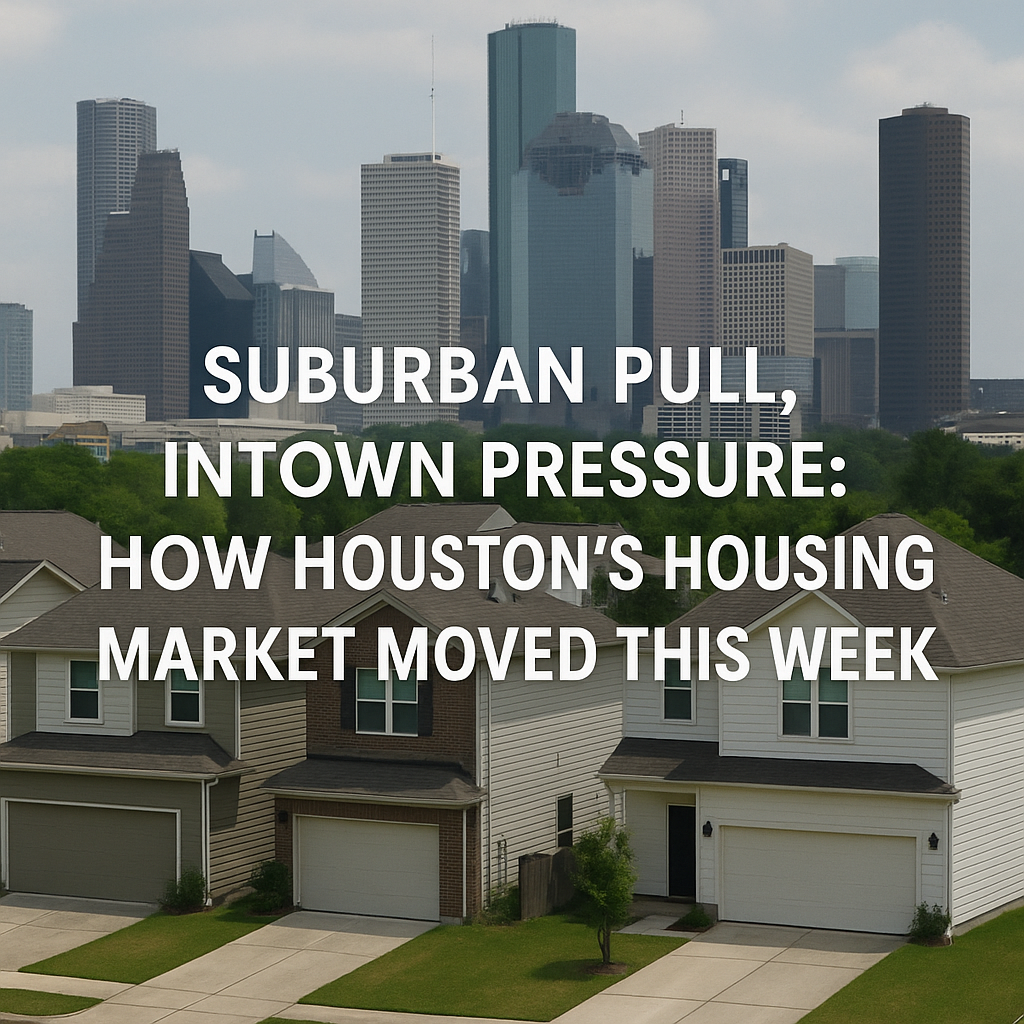
This week’s Houston real estate market update shows a subtle but important reshuffling of buyer attention across the metro. While core neighborhoods inside the Loop still draw strong interest, more buyers are testing the waters in suburban areas with newer construction and perceived value. Agents across Houston report a mix of competitive bidding on move-in-ready homes and slower movement on properties that need work, creating a market defined by quality, location, and pricing discipline.
Market Momentum This Week in Houston
Across Houston, residential activity this week felt steady but selective. Well-presented single-family homes in Inner Loop neighborhoods such as Montrose, The Heights, and parts of West University continued to attract solid foot traffic, especially when they offered updated kitchens, functional outdoor spaces, and off-street parking. At the same time, several agents noted that buyers who had been focused tightly on the Inner Loop are now widening their searches to include areas like Spring Branch, Cypress, and Katy for more space and newer builds.
Compared with recent weeks, the mood among buyers felt slightly more decisive. Instead of touring a long list of homes, many buyers came in better prepared and ready to write offers quickly on properties that checked most of their boxes. However, they remained price-sensitive: homes that felt even slightly overpriced for their condition or location tended to sit longer and see fewer second showings.
Neighborhood Shifts to Watch
Inner Loop vs. Suburban Trade-Offs
One of the clearest dynamics this week was the push-pull between Inner Loop convenience and suburban space. In Montrose and The Heights, agents reported strong interest in renovated bungalows and townhomes with modern finishes. A few buyers who had spent months trying to land a home in The Heights described feeling squeezed by competition and pricing, leading them to explore Oak Forest and Garden Oaks as alternatives with similar character but slightly more breathing room.
Meanwhile, out west, neighborhoods in and around Katy saw healthy traffic at open houses, particularly for late-2010s and newer construction with open floor plans and community amenities. One agent described a family relocating from Chicago who initially targeted West University for its schools and proximity to the Medical Center, but after seeing their price point go further in Katy, they shifted their focus to master-planned communities with pools, trails, and newer schools.
Buyer Behavior
Buyer behavior this week in Houston was defined by a careful balance of urgency and caution. In Midtown and Downtown adjacent areas, young professionals showed interest in townhomes and condos that offered walkability and quick commutes, but many were unwilling to compromise on parking and in-unit laundry. Several agents mentioned that buyers in these neighborhoods asked more questions about HOA stability, reserves, and monthly dues before committing to a second visit.
In contrast, first-time buyers exploring Cypress and
Seller Behavior
This week, Houston sellers appeared increasingly aware that presentation and pricing matter more than ever. In West University and River Oaks, some higher-end listings that had lingered earlier in the month were quietly repositioned with refreshed photos, minor staging, or modest price adjustments to reset buyer interest. One listing agent in River Oaks described a seller who invested in light staging and fresh paint before relaunching the property, noting a clear bump in showing requests afterward.
Farther out, in areas like Spring and Pearland, sellers who took the time to complete small repairs and professional cleaning before listing generally saw steadier traffic. Homes that hit the market this week with cluttered interiors or obvious deferred maintenance tended to be used by buyers as negotiation leverage, with agents reporting more requests for closing cost help or repair concessions.
Emerging Forces Shaping the Market
Two emerging trends stood out across Houston’s residential market this week. First, there was a noticeable uptick in interest for homes that are fully renovated or recently updated, particularly in older neighborhoods like The Heights, Oak Forest, and Montrose. Buyers in these areas seemed less willing to take on major renovation projects, likely due to uncertainty about construction costs and timelines. Move-in-ready homes with updated kitchens, modern bathrooms, and refreshed curb appeal drew more repeat showings and faster offers.
Second, there was quiet but steady interest from investors in more affordable pockets of the metro, including parts of East Downtown (EaDo), Third Ward, and north-side areas near Independence Heights. One agent mentioned working with a small investor group that had previously paused acquisitions; this week, they resumed touring duplexes and smaller single-family homes they believed could be improved and rented out quickly. For these buyers, the focus was less on short-term appreciation and more on long-term rental potential and location near major job centers.
Contrasts Across Houston Neighborhoods
While demand in established Inner Loop neighborhoods like The Heights and Montrose remained firm, activity in some farther-out areas felt more measured. For example, agents noted that while showings in Fulshear and parts of Rosenberg were steady, buyers there tended to take more time comparing multiple homes and communities before making a decision. The contrast was especially clear when compared to competitive, low-inventory pockets of The Heights, where attractive new listings still drew strong early interest.
Another contrast appeared between property types. In Downtown and Midtown, well-located condos and townhomes with strong amenity packages saw more inquiries, especially from renters considering a move into ownership. However, single-family homes in suburban corridors like Spring and Cypress moved at a steadier pace, driven by families prioritizing space and schools over nightlife and walkability.
Mini-Stories from the Field
This week, several agents described specific situations that capture the broader Houston real estate story. In one case, an agent representing a young couple renting in Montrose said they had been casually browsing for months, but a newly listed, nicely updated bungalow in The Heights with a small yard and off-street parking finally pushed them to act. They scheduled a same-day showing and were preparing an offer by the weekend.
Another agent working in Spring Branch mentioned a move-up buyer who had outgrown a townhome in Midtown. After comparing townhomes inside the Loop with single-family options in Spring Branch, they chose the latter for its larger yard and access to good schools, even though it meant a slightly longer commute. Their story mirrors a broader pattern of buyers trading proximity for space.
In Pearland, a seller who had initially listed their home without staging decided to bring in a stager after a quiet first week. Once the home was decluttered, lightly staged, and re-photographed, the listing began to see a more consistent flow of showings, illustrating how presentation can directly affect buyer perception and interest in today’s market.
What This Means for Buyers, Sellers & Agents
For anyone watching the Houston real estate market this week, the key takeaway is that the market is neither uniformly hot nor uniformly slow—it is segmented. Location, condition, and pricing strategy are driving very different outcomes even within the same general area. Buyers who are flexible about neighborhood and open to slightly longer commutes are finding more options, while sellers who present their homes well and price in line with recent activity are still seeing solid results.
Compared with recent weeks, there is a slightly stronger sense of realism on all sides. Buyers understand that desirable, well-priced homes in The Heights, Montrose, or Katy will not linger, and they are prepared to move quickly. Sellers, meanwhile, are increasingly willing to make small improvements or adjust expectations to align with current buyer sentiment.
Key Takeaways for Buyers
- Be prepared to act quickly on well-priced, move-in-ready homes in competitive neighborhoods like The Heights, Montrose, and West University, where quality listings still draw strong early interest.
- Consider expanding your search to areas like Spring Branch, Cypress, Katy, or Pearland if you need more space or newer construction within a similar budget.
- Factor in renovation costs and timelines carefully; if you are not ready for a project, focus your search on homes with recent updates, even if it means adjusting location or lot size expectations.
Key Takeaways for Sellers
- Investing in basic preparation—fresh paint, minor repairs, deep cleaning, and staging—can significantly improve showing activity, especially in competitive segments of the Houston market.
- Price your home based on current, nearby activity rather than last year’s peak; buyers this week are value-conscious and quick to pass on homes that feel mispriced for their condition.
- Work closely with your agent on launch strategy: professional photos, strong online presentation, and a well-timed first weekend on the market still make a noticeable difference.
Key Takeaways for Real Estate Agents
- Educate buyers about micro-differences between neighborhoods—such as The Heights vs. Oak Forest or Midtown vs. Spring Branch—so they can balance commute, lifestyle, and budget realistically.
- Coach sellers on the importance of presentation and pricing, using recent local examples to illustrate how small improvements and strategic pricing can change outcomes.
- Stay alert to investor interest in emerging areas like EaDo, Third Ward, and Independence Heights, where long-term rental potential and proximity to job centers may drive quiet but steady demand.
As Houston moves into the coming weeks, the residential market is likely to remain defined by these microtrends: strong demand for well-prepared homes, growing interest in value-oriented suburbs, and cautious but persistent activity from both first-time buyers and investors. Keeping an eye on neighborhood-level shifts will be essential for anyone planning a move in the Houston area.
For more context on broader housing patterns, readers can explore national research from sources like Zillow Research and longer-term housing data from the U.S. Census Bureau. For additional local insights, see our Houston real estate market coverage and our main Real Estate news and analysis.